

To understand the process of creative genius, it is valid for business people to look at the model of the artist. The business of the artist is to create, navigate opportunity, explore possibility, and master creative breakthroughs. We need to restore art, the creation of opportunity, to business.
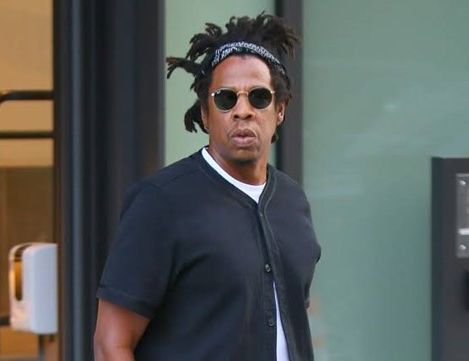
Shawn Corey Carter, known professionally as Jay-Z, is an American rapper, businessman, and record executive. In 2023, Billboard and Vibe ranked him as the greatest rapper of all time. Jay-Z is a billionaire entrepreneur and the wealthiest musical artist in history, with an estimated net worth of $2.8 billion. His major business ventures include Roc Nation, Armand de Brignac, and D’Ussé.
The worlds of the arts and business are formulating a new relationship, distinct from the traditional models of entertainment or sponsorship. In this new relationship, art is a role model for business, since all great art pushes boundaries beyond the established norms. The artist’s task is to break through the limitations of previously codified knowledge, to lead humanity to the future.
Businesses today want to break away from their limitations, aim higher, and be a creative force for the greater good of the world. We need the transformative experiences the arts give us to thrive in a world of change. In ancient cultures, the mystery schools put students through initiations to overcome fear, learn something about their true nature, and gain self-actualization (self-mastery). The arts give us a taste of the mystery and help make sense of the world.
The arts take us on adventures in creative expression that help us explore safely unknown territory, overcome fear, and take risks. We can transfer these learning experiences to the workplace. Art – making has an alchemical effect on the imagination. Art takes people out of the realm of analytical thinking and into the realm of silence, reverie, and heightened awareness. A shared art experience enhances our sense of belonging and enriches conversation.
John Seely Brown, Chief Scientist of Xerox Corporation revealed the three ways he perceives the impact of an art experience. One is the notion that engaging in these types of activities evoke deeper responses, deeper emotions. It brings forth many of the tacitly held beliefs and assumptions that you have. So, we must think of it as evocative of the tacit knowledge.
The second is that focused conversations are built and fused together around evocative objects that concern problems that the researcher has on his or her mind. He stated that it was the researcher that had the real problem, but the interaction with the artist made a big difference. Now that is a complex interplay, because it takes over like a conversation that unfolds over many months.
The third concerns the power of simplicity. Simplicity prior to complexity does not mean much. But simplicity, after you pass through the wall of complexity, after you have marinated in a fully nuanced reading of the situation and then rendering it in very simple ways is extraordinarily powerful.
Artists and business leaders have many parallels, both involve having a guiding vision, a potent point of view, formulating an ideal, navigating chaos and the unknown, and finally producing a new creation. They must be astute in assessing and developing talent, as well as making sure that the talent works well together. Executives, however, could learn from artists’ ability to dare to break molds, lead changes in taste, raise funds, and be productive while being frugal.
If the biggest challenges we face today concern global competition, managing change, and employee disengagement to name a few, what can leaders do to inspire teams to achieve higher levels of performance? How can leaders tap into the hearts and minds of employees, to find the “burning platform” that mobilizes strategy into action? Innovation by its nature, demands change.
In The Heart of Change, John Kotter states: “People change what they do less because they are given analysis that shifts their thinking than because they are shown a truth that influences their feelings.” He emphasizes that the central challenge is changing people’s behaviour and the way to change behaviour is to influence their feelings.
The heart of change is in the emotions. Through art we can make it safe to ask the deeper questions that lead to the emotional truth about a situation. Art creates a bonding experience that facilitates collaboration and accelerates the ability to get to the heart of a problem. Drawing or painting images illustrates how differently we see things and helps us appreciate that many points of view contribute to the whole. Images externalize the unconscious and make tacit knowledge visible.
Basically, there are four options widely used regarding Arts-in-Business. The first is when business uses the arts for decoration and the second is business using the arts for entertainment, either by giving the employees benefits such as tickets for selected shows, performances and arts exhibitions in their leisure time, or they invite artists into the company for performances at annual meetings, customer events or special occasions.
The third option is business applying the arts as instruments for team building, communication training, leadership development, problem solving and innovation processes. The last is when business integrates the arts in a strategic process of transformation, involving personal development and leadership, culture and identity, creativity and innovation, as well as customer relations and marketing.
Creativity is essential because it is at the heart of innovation, and innovation is a growth driver and, therefore, a business imperative. The arts have served as a complementary vehicle to more traditional learning approaches. They have helped to change attitudes by letting employees confront their assumptions in a nontraditional and non-intimidating environment.