

In May 2026, the first France – Africa summit held in a non – Francophone African country took place at the Kenyatta International Convention Centre (KICC) and University of Nairobi, Kenya. The summit was co-hosted by Kenya and France, marking a significant strategic shift in France’s engagement with the continent.
The summit brought together over 30 African heads of state, business leaders, investors, innovators, and representatives from international financial institutions, including the United Nations and the African Union, under the theme “Fostering Mutually Beneficial Partnerships and Economic Growth”.
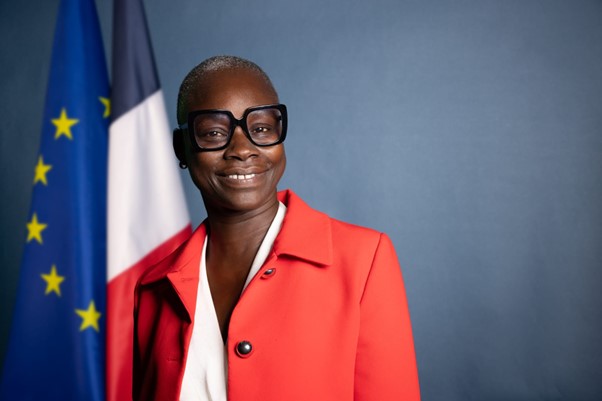
A week ago, I was hosted by the French Ambassador to Ghana, Her Excellency Diarra Dimé – Labille at the French Residence in Accra. This was our second meeting after my participation in the France – Africa summit, working with the communications team on-site. This meeting was to place the spotlight on the direction of the mission under her leadership in strengthening Ghana – France bilateral relations.
Ghana and France have maintained a strong bilateral relations based on regional security, economic cooperation, and reparatory justice, which was deepened by the recent high-level state visits between President Emmanuel Macron and President John Dramani Mahama to advance strategic bilateral ties and multilateral cooperation.
Ambassador Diarra Dimé – Labille is a seasoned diplomat who embodies a modern and inclusive vision of French diplomacy. Born in Senegal, she has effectively combined legal expertise, humanitarian engagement, and a passion for Africa. After a distinguished service at the Élysée Palace as a Technical Advisor at the Africa unit, she was appointed French Ambassador to Ghana in September 2025.
Prior to that, she joined France’s Permanent Mission to the United Nations in New York as Legal Advisor in 2020. In that role, she worked on sensitive issues such as missing persons in Syria, highlighting the importance of international cooperation for justice and truth. Her posting to Ghana was praised by observers of French diplomacy as a wise choice, highlighting her experience and deep commitment to Franco-African relations.
As Head of the French mission in Ghana, she highlighted her objective to promote French interests, support development initiatives, and reinforce ties between Ghana and France. She highlighted initiatives to resolve the several challenges in agriculture, ranging from low productivity levels to our inability to add value to raw materials and industrialisation agenda.
“The challenge today is no longer only to produce more, it is also about producing better, creating more value locally, generating decent jobs, strengthening food security and making agriculture more resilient to climate change. This is precisely the ambition of France and we are proud to accompany Ghana on this journey, working hand in hand with the Ministry of Food and Agriculture. France, alongside with the European Union, is financing two major projects implemented by the Government of Ghana; the BETTER Farming in Northern Ghana Project with a €19m grant focusing on sustainably developing four agricultural value chains: shea, soya, beekeeping and vegetable. The objective is to ensure that a greater share of the value created remains within Ghana, creating jobs and increasing rural incomes.
The second is the Agricultural Water Management Project – AWMP, a €45m grant to address one of the main constraints to agricultural productivity in Northern Ghana (dependence on rainfall) through the rehabilitation and construction of dam infrastructure, to enable farmers to cultivate throughout the year rather than only during the rainy season. This increases productivity, improves food security, reduces climate-related risks, and creates opportunities for higher-value crops during the dry season”, she emphasised.
Ambassador Dimé – Labille further stated that the two projects illustrate France’s approach in investing not only in primary agricultural production, but across the entire agricultural system, from water management and climate resilience to value addition, market access and rural economic development. She is convinced this integrated approach is essential for building a more competitive, sustainable and prosperous agricultural sector in Ghana. She mentioned France’s financial contribution to the USD6m World Food Program, supporting the rehabilitation of infrastructure and equipping the Strategic Grain Reserve program in Tamale.
Bilateral trade between Ghana and France saw a very marked increase in 2025, with a growth of 30%, valued at €879m and a structural surplus of €425m in Ghana’s favour in 2025; a total of €652m French imports from Ghana and €227m of French exports to Ghana. In the area of trade, Ambassador Dimé – Labille indicated the possibility and need to increase the volume of trade between Ghana and France.
“We can and must, of course, continue to increase the volume of our trade. Business France, the agency responsible for promoting French exports, and the France-Ghana Chamber of Commerce, which acts on behalf of Business France in Ghana are fully committed to this end, notably through the organization of thematic seminars, study tours and business forums enabling companies from both our countries to deepen their cooperation. The French Public Investment Bank (BPI), which has offices in the region, also offers financing schemes for Ghanaian importers wishing to purchase French equipment. Last April, I had the opportunity to present the opportunities offered by Ghana – against a backdrop of a marked improvement in the macroeconomic situation – to an audience of major French companies at a meeting organized in Paris by MEDEF, France’s largest employers’ association”, she added
Regarding attracting French investment into the country as Ghana makes a giant step to open for foreign direct and indirect investments, Ambassador Dimé – Labille commended the efforts of President Mahama and his government for the spectacular recovery of the macroeconomic situation observed over the past one and half years.
“From my discussions with French business leaders, I have gathered that, like all business leaders, they are, above all, concerned with the stability of the business environment and the legal certainty of contracts. I also consider the government’s desire to maximize the benefits (innovation, training, and reinvestment) for the Ghanaian economy to be entirely legitimate. This requirement is fully aligned with the way in which French companies operate and invest abroad in general, and in Ghana in particular.
Indeed, more than 60 French companies operate in Ghana — from large corporates to innovative SMEs and start-ups that bring French expertise in energy (TotalEnergies), infrastructures & logistics (CMA-CGM, ORSAM), Construction Materials (Saint Gobain, Nexans), agriculture (Danone/Fanmilk, Golden Exotics), health (Sanofi), financial services (Advans) and retail businesses (Castel, Decathlon, Carrefour). Together they employ more than 50,000 people directly and indirectly, and their investments in the country have increased tenfold over the last decade, exceeding €2.5 billion”, she outlined.
The peace and security of the West African sub-region is being critically challenged by violent extremism, especially the Sahel spillover. Ambassador Dimé – Labille commented on France’s approach on terrorism, non-proliferation and disarmament, and its commitment to maintain the peace and stability within the sub-region.
“Currently, we are working with countries that need our support and in the case of Ghana, we are working closely on defence and regional security in various ways, from the sharing of information, military training, peacekeeping, and counter-terrorism to counter extremism and piracy. Within the EU framework, France has shifted from unilateral military interventions to multilateral support for West African peace. We now coordinate security, capacity-building, and governance efforts through European instruments like the European Peace Facility, and partnerships with ECOWAS”, she stated.
Concluding our conversation, Ambassador Dimé – Labille painted a brighter picture of the future of Ghana – France bilateral relations. She said “the sky’s the limit and we are definitely going to continue to work closely as partners even though we might not be aligned on everything. Example is the recent resolution on reparation, which we abstained due to a few areas of concern and reservations we had. Nevertheless, we continue to engage to firm up things. We are real partners and we ought to listen to one another to ensure we are able to cooperate for the benefit of Ghanaians and people in France”.